 TM
 EN
 RU

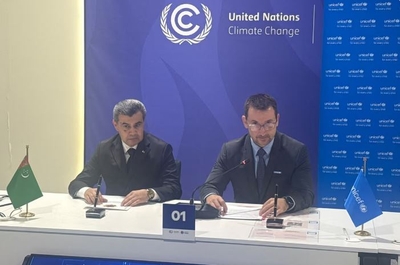
At a dedicated session held within the Turkmenistan Pavilion at COP31, representatives from international organizations, government bodies, and regional institutions gathered to discuss the role of the Capacity-building Initiative for Transparency (CBIT) and regional cooperation across Central Asia. Delivering a key address at the event, Ms. Maral Kuliyeva, Rector of the International University for the Humanities and Development (IUHD), highlighted the pivotal role that higher education and academic research play in advancing sustainable development and national climate action.
Addressing delegates from the UN Food and Agriculture Organization (FAO), the Ministry of Environmental Protection of Turkmenistan, and the Scientific Information Center of the Interstate Commission for Sustainable Development (ICSD IFAS), Rector Kuliyeva emphasized that climate transparency serves as a bridge between scientific data and policy execution.
"For universities, climate transparency is at once a subject for specialist training, an area for applied research and an opportunity to help ensure that reliable knowledge is reflected in practical decisions," Kulieva stated.
The session highlighted Turkmenistan’s landmark preparation of its first Biennial Transparency Report (BTR), which compiles national greenhouse gas inventories and tracks progress toward Nationally Determined Contributions (NDCs). However, as noted during the discussion, high-quality data collection requires interdisciplinary experts who can navigate both technical methodologies and sectoral contexts in energy, agriculture, and water management.
Key Highlights of the Address were:
- Capacity Building: The CBIT initiative, alongside regional platforms such as ReCATH and CBIT-GSP, plays a crucial role in building sustainable national institutions that retain institutional memory beyond project lifespans.
- Empowerment of Youth: Academic curricula must equip young professionals with practical skills in data verification, trend analysis, and clear reporting to serve both the public and private sectors.
- Regional Hub in Ashgabat: Turkmenistan’s initiative to establish the Regional Centre for Climate Technologies for Central Asia in Ashgabat offers a promising platform for technological transfer, water-saving methodologies, renewable energy adoption, and methane reduction.
Rector Kuliyeva concluded with a call to action, encouraging continuous exchange between academia, decision-makers, and international partners to transform climate reporting from a regulatory obligation into a strategic tool for regional resilience.